Contact us


Author: John Fimbel
Scalene spent January in New York at the NRF Big Show, and like every year, the show delivered a mix of inspiration, hype, hard truths, and practical signals about where retail is actually heading. What stood out most this year wasn’t a single technology or buzzword, but a consistent theme: retailers are under pressure to make better decisions, faster, with fewer resources and physical space is once again central to that challenge.
Below are five takeaways from NRF Big Show 2026 that feel especially relevant for retail leaders thinking about space, assortment, and performance at scale:
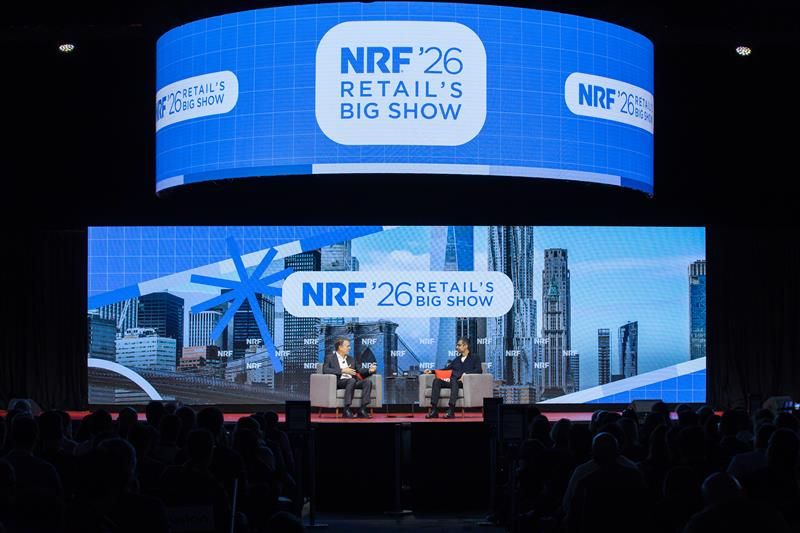
The AI conversation at NRF has clearly shifted. In prior years, much of the dialogue focused on pilots, proofs of concept, and innovation labs. This year, the tone was different. Retailers are no longer asking if AI belongs in their organization; they’re asking where do we deploy now for real, measurable value, and where do we deploy next.
What was refreshing is that many of the most compelling conversations weren’t about flashy generative demos, or replacing core systems, but about operational AI that quietly improves and amplifies existing activities – from planning to forecasting, and decision-making. Retailers are looking for AI that augments teams, reduces manual effort, and helps them see around corners. This approach lowers risk, avoids major transformation projects, and delivers faster returns because it works with established data, processes, and teams.
From a space-planning perspective, this matters enormously. Decisions about how much space to allocate to categories, how layouts should vary by cluster, or how stores should flex with demand are too complex for traditional methods and large enterprise systems built for a different purpose. AI-driven insights are becoming table stakes for retailers managing hundreds or thousands of stores and AI-driven space and assortment optimization is the practical way to unlock more value from existing planning ecosystems that leverage large enterprise software systems.
AI is being applied as an intelligence layer: automating complex analysis, highlighting trade-offs, and helping retailers make informed planning decisions that deliver greater commercial impact. For retailers under pressure to improve performance without adding cost or disruption, this is where immediate value is emerging.
Despite years of “retail apocalypse” headlines, NRF reinforced a simple truth: physical stores are not going away. Instead, their role is changing.
Stores are now expected to do more than transact. They serve as brand touchpoints, fulfillment nodes, community hubs, and discovery engines all at once. That puts pressure on how space is allocated and justified.
Retailers are asking tougher questions:
• Which categories truly deserve more square footage?
• Where does experiential space actually drive conversion?
• How do we balance back-of-house, fulfillment, and selling space?
These are macro-level questions, not fixture-level tweaks. The winners will be retailers who treat space as a strategic asset rather than a static constraint or cost to be optimized.
Another consistent signal from NRF: uniform store layouts are losing relevance. Retailers increasingly acknowledge that customer demand, shopping missions, and category performance vary dramatically by market.
While many retailers have talked about localization for years, what’s different now is the urgency. Margin pressure, the cost of capital and labor constraints are forcing retailers to be more precise about where they invest in space and inventory.
This has major implications for macro space planning. Instead of asking, “What does the standard store look like?” retailers are asking, “What should this store look like here?”
The retailers making progress are those using data-driven clustering and scenario planning to tailor space by region, store type, or customer profile without creating operational chaos.
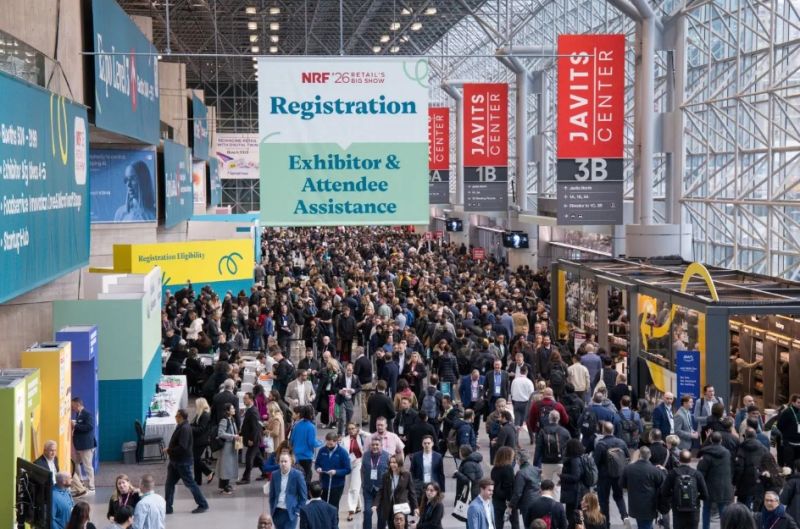
One of the more candid themes we heard in side conversations was dashboard fatigue. Many retail teams are drowning in reports, KPIs, and tools, yet still struggle to make confident decisions.
What merchants and planners want now is clarity:
• Clear recommendations, not just data
• Scenario comparisons, not static reports
• The ability to understand trade-offs before making changes
This is particularly true for space planning, where decisions are costly, slow to reverse, and highly visible. Tools that help teams explore “what if” scenarios at a macro level before committing to resets or remodels are resonating strongly.
Perhaps the most important takeaway from NRF is that space is once again a strategic topic at the executive level. As retailers rebalance e-commerce and physical store investment, leadership teams are re-engaging with questions about store size, format mix, and long-term footprint strategy.
This isn’t about shrinking or expanding blindly.
It’s about optimizing:
• How much space is truly productive
• Where capital should be deployed
• How formats should evolve over time
Macro space planning sits squarely at the intersection of strategy, finance, and operations and NRF made it clear that retailers are looking for partners and platforms that can operate at that altitude.
NRF Big Show 2026 reinforced that retail is entering a more disciplined, data-driven phase. The excitement around AI is real, but so is the demand for practical impact. Physical stores remain critical, but only when space is thoughtfully planned and continuously optimized.
For those of us focused on macro space planning, this is a moment of opportunity. Retailers are ready to rethink how they allocate space, how they adapt to local demand, and how they use technology to make smarter, faster decisions.
The conversations at NRF suggest that the future of retail won’t be defined by who has the most stores or the biggest footprint but by who uses their space most intelligently.
Get in touch to discuss how optimised space, assortment and pricing can help your business.